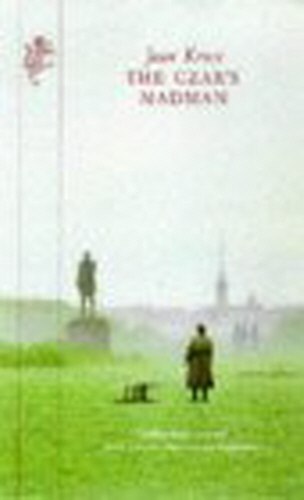
The Czar's Madman
About the book
A nobleman declared mad after honestly criticising the Czar becomes the focus of a study of truth and power.
Original title: Keisri hull
Discover the world.
One book at a time.
Kross reconstructs Estonia’s past through difficult ethical choices. In this historical novel, honesty with a ruler can cost a person freedom. Kivirähk imagines the disappearing language of snakes, while Tammsaare and Vilde explore land and social inequality. Tode carries questions of belonging to Paris. Finnish-language Oksanen, connected with Estonia through family and subject matter, appears here as a voice shared with Finnish literature.
No matches. Try another language or search term.
A nobleman declared mad after honestly criticising the Czar becomes the focus of a study of truth and power.
Original title: Keisri hull
A boy who speaks the language of snakes watches a forest culture disappear as new customs triumph.
Original title: Mees, kes teadis ussisõnu
An arrangement between an estate owner and a peasant exposes economic and sexual dependencies.
Original title: Mäeküla piimamees
Two neighbours’ rivalry and hard work on the land become an inquiry into justice and human ambition.
Original title: Tõde ja õigus I
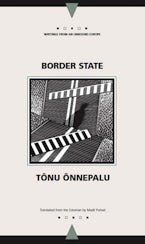
A young eastern European in Paris confronts Western aspirations with estrangement.
Original title: Piiririik
Two women’s encounter exposes memories of Estonia’s Soviet occupation, betrayal and sexual violence.
Original title: Puhdistus
A train journey prompts a tsarist official to examine compromise, ambition and responsibility for serving power.
Village life mingles with Estonian folklore, spirits and the cunning needed to survive a hostile world.
Original title: Rehepapp
Wydawnictwo Literackie
Translated by Anna Michalczuk-Podlecki
Edition source ↗Sources on authors and their connections to this country. Specific edition details appear beside each book. Polish and English originals are not labelled as translations.